
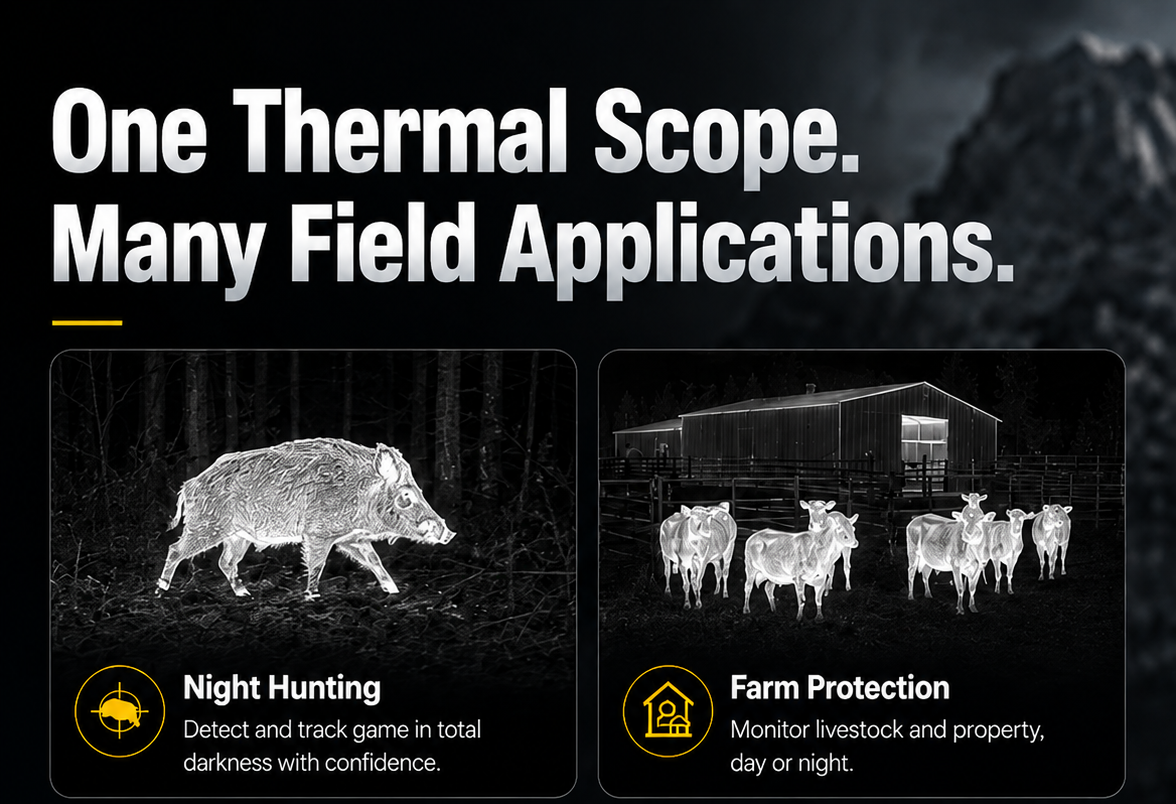

Choosing the right thermal scope can be confusing, especially for new users. This guide explains the key factors to consider before making a decision.
1. Resolution
Higher resolution provides better image detail.
Common options:
- 256×192 (entry-level)
- 384×288 (mid-range)
- 640×512 (high-end)
2. Sensor Sensitivity (NETD)
Lower NETD means better performance in low contrast environments.
3. Lens Size
Larger lenses improve detection distance but increase size and weight.
4. Size and Weight
Compact devices are easier to carry and use, especially for extended periods.
5. Intended Use
Consider how you plan to use the device:
- hunting
- observation
- security
Conclusion
There is no “best” thermal scope — only the one that fits your needs.
As the market evolves, more compact and versatile options, such as those offered by Gelangder, are becoming increasingly popular.